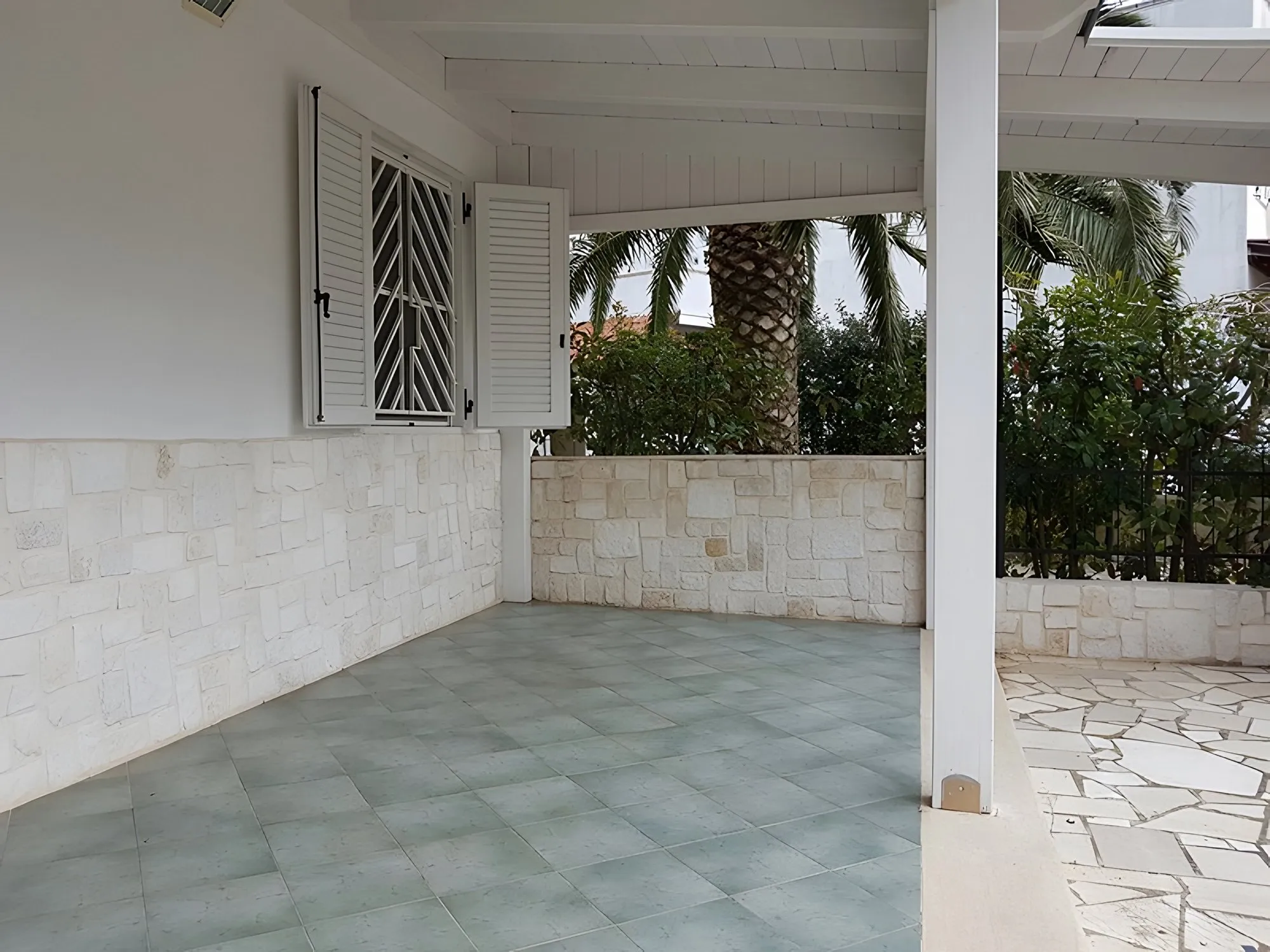
The same Trani stone, from the same quarry, can become a rustic wall, a regular courtyard floor or a dry-stone wall. What changes is the finish: how the stone is split, sawn or dressed after extraction. Here are the finishes in our catalogue, with the thicknesses from the product sheets and the uses we suggest them for.
Natural split face: the face of the quarry
This is the stone as it is. The visible face is the one that opens when the block is split: irregular, with its veining and stylolites, the thin dark lines between the layers. This finish gives the crazy paving stone (opus incertum), known in Italian as scorza, in free-form pieces: 1/2 cm thick for wall cladding, from 2/4 up to 10/20 cm for pedestrian and driveway paving. It is the choice for the most rustic character.
Back-sawn (retrosegata): natural face, flat back
The visible face stays natural and the back is sawn. The result is an even thickness, which makes wall installation faster and more regular. Back-sawn products include sawn-back crazy paving, from 1 cm thick, squared sawn-back strips for façades and walls, and squared stone: slabs 20-25 cm wide in random lengths for floors and cladding, from 1/2 to 4/5 cm.
Split (tranciata): clean sides, sturdy thicknesses
The stone is split by machine: the sides are clean, the face stays rough. This is the finish for thick pieces meant for outdoor use:
- split-face strips, 10 cm wide in random lengths, from 4/6 to 10/12 cm, for walls and garden walls;
- stone setts 10x10 cm, for driveway paving and mosaics;
- split squared paving, slabs 20-25 cm wide for outdoor floors.
Tumbled: soft edges, a time-worn look
In Italian “burattata” and “anticata” mean the same thing: tumbled. The pieces turn in a tumbling machine, a rotating drum that softens edges and surface, and come out with a lived-in look that suits historic centres, farmhouses and gardens. Pieces are tumbled after being split, machine-split or back-sawn, which is why the catalogue lists tumbled crazy paving, tumbled setts, tumbled squared stone with a sawn back and tumbled split squared paving.
Bush-hammered: a hammered surface
Bush-hammering strikes the surface with a pointed tool and leaves it rough and even. It is the finish of the wall copings, 4 or 5 cm thick with two drip grooves, and of made-to-measure steps, skirting and thresholds.
Trimmed and rock-faced
Trimming cuts the edges to size and gives regular joints. Trimmed strips in Trani stone come in heights from 5 to 40 cm; the same sheet includes the 4x20x1.5 cm thin strips in trachyte, basalt, sandstone and travertine. Stone kerbs for flower beds and paths are also trimmed, with rounded edges.
Rock-facing does the opposite: it leaves the face in relief. Rock-faced Trani stone, 3 cm thick, gives walls and façades a rustic, solid look.
Which one to choose
- Interior wall, quick installation: back-sawn.
- Rustic wall or façade: natural split face, split or rock-faced.
- Outdoor floor, pedestrian or driveway: split, or natural split face from 2/4 cm up.
- Antique look: tumbled.
- Copings, steps and thresholds: bush-hammered.
Each finish also changes how light falls across the wall: the same stone, split or sawn, looks like a different material. That is why it pays to look at installed photos before deciding. You will find them on the Installations page, the patterns under Laying patterns and the technical data on the Trani stone page.
Have a project in mind? Write to us on WhatsApp or by email with a photo of the wall or courtyard and the square metres: we will suggest the finish and tell you how many pallets you need.